The Kick Chase: Turning Distance into Pressure
The rugby kick chase works best when its shape fits the kick and field. Learn to spot the roles, read the receiver’s options, and judge the plan.
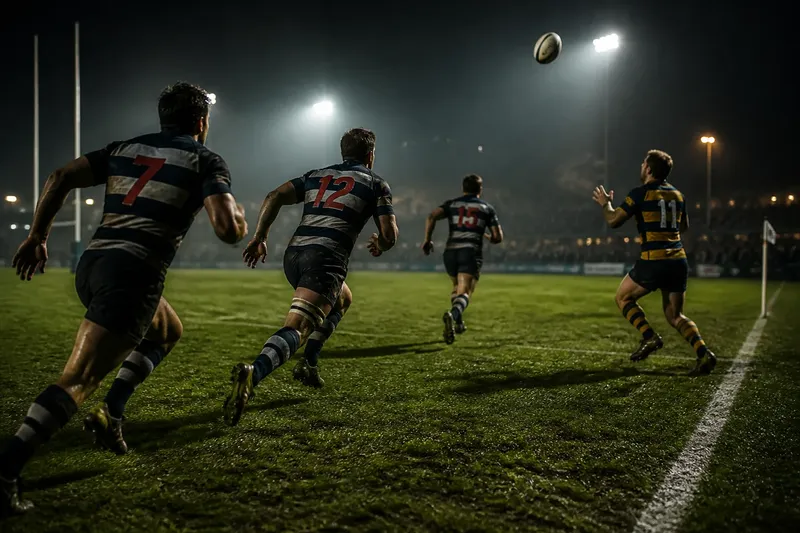
The common mistake in a rugby kick chase is to follow the ball with your eyes and miss what the kicking team is trying to protect. That can make a deliberate line look like a disorganized sprint. Watch the runners’ lanes and the space they leave behind, and the tactic becomes easier to read.
A chase has two jobs: put pressure on the receiver and keep the opposition from exploiting the field the chasers have crossed. Like a doorstop holding a door at an angle, one player’s position can shape where the next action goes without winning the ball outright.
Read the jobs within the chase
The first chasers apply pressure near the expected landing area. Teammates may approach from wider lanes to limit passing options, while deeper players protect against a return kick or a run through the space behind the first wave.
These jobs depend on one another. If every chaser targets the catcher, the receiver may have an easy pass or kick into the space behind them. If everyone hangs back, the catcher has time to turn and attack. The shape is a choice about which threats to confront first.
The kick affects that choice. A high ball gives players more time to read its flight and move into position, but the receiver may also have time to call for support. A flatter kick leaves less time to organize, so the chasers may need to react to the landing area rather than settle into a planned shape.
Recognize three common chase shapes
A broad line limits lateral options
Several chasers move forward across the field with space between them. This can restrict the receiver’s ability to pass easily to a teammate or step into open ground. Look for multiple defenders approaching on a shared front, rather than one runner racing ahead alone.
The line works only if its gaps remain manageable. A chaser who advances far ahead can leave a lane beside them; a runner who stays too wide may not help pressure the catcher. The rest of the team’s positions show whether the broad shape is intentional or has come apart.
A central pair challenges the landing area
Two close chasers may target the likely catcher while other players cover the outside or stay deeper. The pair can make the reception difficult, but their teammates must account for a quick pass, a sidestep or a kick beyond them.
Watch which direction the pair seem to steer the receiver. If the wider defenders are ready to close the outside, the plan may be to funnel the play inward; if they hold their ground, the team may be prioritizing cover over immediate pressure.
A staggered line guards the space behind
Some players advance while others remain farther back. The front group can challenge the catch, and the deeper players cover the area exposed by that advance. This shape may give the receiver more room at the landing point, but it offers protection if the ball is kicked back over the first line.
Deeper players are not necessarily late or uninvolved. Their position may be the part of the chase that prevents the next kick from turning into an attack through open field.
Use the kick and field to read the plan
The best clues are visible before the catch. Check the flight, the receiver’s support, the touchline and the positions of the players behind the chase. Use each observation to decide what the kicking side may be trying to close down.
- Observe the ball’s flight: If it hangs high, then look for chasers adjusting their lanes as they have time to organize; if it travels flatter, expect a quicker direct response and watch for late gaps.
- Observe the receiver’s support: If teammates gather near the catcher, then watch whether the chase spreads to restrict a pass; if the receiver is isolated, look for a tighter contest around the landing area.
- Observe the receiver’s distance from touch: If the sideline limits one route, then see whether chasers direct pressure toward the remaining open field; if the receiver is central, look for coverage on both sides.
- Observe the depth behind the front line: If defenders stay deep, then note how they cover a return kick; if no one is visible behind the chasers, watch for space that the receiving team could target.
- Observe the first chaser’s approach: If they arrive from an angle, then look for a route being directed toward other defenders; if they approach straight on, check whether the aim is to challenge the catch.
- Observe gaps between runners: If a wide channel opens, then expect the receiver to have an escape or passing option and look for a teammate adjusting to cover it; if the line stays connected, track which option it is closing.
Say you see a high kick heading toward a receiver near the right touchline, two chasers moving toward the landing area and a third defender holding deeper ground. The touchline removes an outward route, so the pair can focus on the receiver’s path back toward the middle; the deeper defender can respond if the ball is kicked back. The observable tradeoff is that the receiver faces less room to move near the catch, while the deeper player is not available to join the immediate contest.
What should you look for as the ball comes down?
Why might a chaser slow before reaching the receiver?
They may be adjusting their line to avoid overrunning the landing area or opening a gap beside a teammate. Check whether the runner’s pace change keeps them positioned to respond to the catch.
Why might one chaser approach from the side?
An angled approach can direct the receiver toward other defenders rather than leave every route open. Watch the surrounding players to see whether they are positioned to meet the receiver on that route.
What makes a chase look disconnected?
A large gap between the leading runner and the next defender can leave the receiver an easy lane. Several chasers converging on the same point can also leave a teammate free to receive a pass.
Does a kick chase always aim to recover possession?
No. The kicking team may instead try to limit where the receiver can move or make the next pass or kick hurried. Look at the positions of the chasers and cover players to see which outcome the shape appears to favor.
Judge the plan by the space it leaves
Once the receiver has the ball, look beyond the catch itself. Notice which routes remain open and whether the deeper players can respond to a kick or a run into the space behind the first line.
Then watch how the receiving team chooses to move the ball. A pass to a waiting teammate, a kick under pressure or a turn toward the touchline can each reveal a different weakness or strength in the chase shape. The receiver’s action matters, but so does the space that action is aimed into.
For a clear read of a rugby kick chase, follow the first chasers, the support around the receiver and the cover behind them. That sequence helps distinguish a plan to contest the catch from one designed to protect open ground. A good reading of the play comes from seeing how the team balances those jobs, not from judging the chase by how close one defender gets.